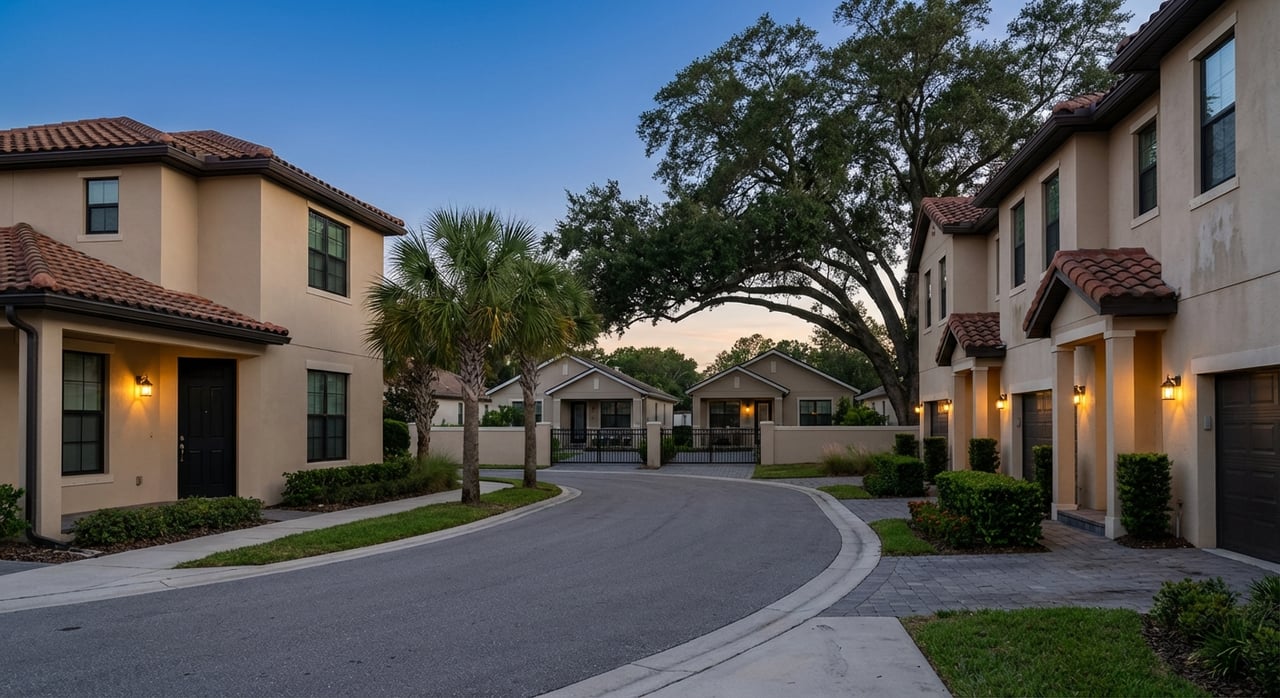
Looking at homes in VillageWalk at Lake Nona and keep seeing “CDD” on listings? You are not alone. Understanding CDD fees helps you compare homes, plan a realistic budget, and avoid surprises before closing. In this guide, you will learn what a CDD is, what the fees pay for, how they differ from HOA dues, how lenders view them, and exactly how to find the current amount for a VillageWalk property. Let’s dive in.
What a CDD is in Florida
A Community Development District, or CDD, is a public special-purpose local government created to plan, finance, build, operate, and maintain community infrastructure within a set boundary. In Florida, CDDs operate under Florida Statute Chapter 190. A CDD has an elected board, adopts a public budget, may issue bonds, and can levy assessments on properties inside the district.
CDDs are common in large master-planned communities because they allow developers to finance roads, water management, utilities, and amenities upfront. Homeowners repay that investment over time through assessments.
How CDD fees work
CDD assessments generally come in two parts:
- Bond assessment (capital): Repays long-term bonds used to build infrastructure and amenities. These amounts are usually set by the bond schedule and can appear as a lien tied to the parcel. They are often collected annually.
- O&M assessment (operations and maintenance): Covers yearly costs like landscaping of common areas, stormwater system upkeep, staffing for amenities, insurance, utilities, and district administration. The CDD board adopts the O&M budget each fiscal year at a public hearing, so this amount can change from year to year.
How billing and collection work
- On your tax bill: Many CDDs place assessments on the county property tax bill as a non-ad valorem item. You will see it alongside your property taxes and escrow if you have a mortgage.
- Direct billing: Some districts bill owners directly for O&M instead of using the tax bill. The billing method matters for your monthly escrow and cash flow planning.
Why amounts change
- O&M can fluctuate annually based on the adopted budget and actual maintenance needs.
- Bond assessments follow a schedule set when the bonds were issued, though districts may offer prepayment options or adjust if bonds are refinanced.
Because CDDs are public entities, their budgets and meetings are public record. You can look up district information and contacts through the Florida Special Districts Information Program.
What CDDs often fund in Lake Nona communities
While each district is unique, CDD-financed improvements commonly include:
- Roads, entry features, and related infrastructure
- Stormwater lakes, pumps, and drainage systems
- Water and sewer infrastructure where needed
- Parks, trails, and amenity centers such as clubhouses and pools
- Security-related infrastructure like gates and lighting for common areas
- Long-term reserves for infrastructure maintenance
- District administration, engineering, management, legal, and audit costs
CDD vs HOA: What is the difference?
CDDs and HOAs often exist side by side, but they are not the same.
- Entity type: A CDD is a public special district created under state law. An HOA is a private nonprofit corporation governed by community covenants.
- What they fund: CDDs repay infrastructure bonds and maintain district-owned improvements. HOAs fund association operations, private amenities, landscaping contracts, enforcement, and reserves per the governing documents.
- How they collect: CDDs levy non-ad valorem assessments that may appear on your tax bill or be direct-billed. HOAs collect dues and special assessments under the covenants.
- Transparency: CDD budgets and meetings are public. HOAs provide records to members per statute and their governing documents.
The bottom line: you may have both a CDD assessment and HOA dues in VillageWalk. They serve different purposes and are set by different boards under different rules.
What it means for your budget and mortgage
CDD assessments are recurring housing costs. Include them in your monthly budget and in your debt-to-income planning.
Budget modeling examples:
- Hypothetical A: Total CDD of $600 per year equals about $50 per month.
- Hypothetical B: Total CDD of $3,000 per year equals about $250 per month.
- These figures are examples. You need parcel-specific numbers for VillageWalk.
Mortgage underwriting: Lenders require disclosure of HOA and CDD assessments. Larger assessments can affect your debt-to-income ratio. Your lender will ask whether the CDD appears on the tax bill or is billed directly and may escrow for it if it is on the tax bill.
At closing: Assessments may be prorated between buyer and seller. Title and lender teams will confirm any recorded district liens and the current assessment schedule.
When you learn about CDD fees in a purchase
- Before you write an offer: Listings may or may not mention a CDD. Ask your agent to verify early.
- During due diligence: Request CDD documents, including the adopted budget, assessment roll, and any bond schedules.
- Title search and tax review: The title commitment often notes recorded special assessments. The county tax bill shows non-ad valorem items when the district uses the tax roll.
- Final numbers at closing: Your Closing Disclosure will show prorations and who pays the current year’s assessment.
How to find VillageWalk’s exact CDD amount
Use these steps to get authoritative, current numbers for a specific VillageWalk property in Orange County:
Confirm the CDD status with the seller and listing agent. Ask for the most recent CDD disclosure, the adopted CDD budget, and the parcel’s assessment breakdown.
Check the Orange County Property Appraiser. Search the parcel and review tax and assessment data to see whether non-ad valorem items appear. Start with the Orange County Property Appraiser website.
Review the Orange County Tax Collector record. If the CDD uses the tax roll, the annual assessment will show as a non-ad valorem line item. Visit the Orange County Tax Collector to review the tax bill or payment details.
Contact the district manager or official district site. Request the current adopted budget, assessment roll for the parcel, and any bond prepayment options. If you do not know the district’s name or contact, search the Florida Special Districts Information Program by county and community name to locate the listing.
Confirm with the title company. Ask for written confirmation of any recorded CDD liens and any payoff or prepayment nuances for the parcel.
Clarify HOA overlap. Ask VillageWalk’s HOA or management what the HOA funds versus what the CDD maintains so you can budget for both. Obtain HOA documents and dues schedules.
Tip: For additional background on how special districts operate in Florida, the Florida Association of Special Districts provides helpful educational resources.
Common misconceptions and cautions
- Misconception: A CDD is the same as an HOA. They are separate entities with different powers and purposes.
- Misconception: CDD fees are optional. Assessments are mandatory for properties within the district.
- Caution: O&M assessments can change each year. Attend or review the district’s budget hearing materials to understand upcoming changes.
- Caution: Bond assessments can last for decades. Ask for the remaining term and any prepayment policies.
- Caution: Listings can omit or mislabel CDDs. Always verify through public records and district documents.
Quick checklist for VillageWalk buyers
Use this list during your offer and inspection period:
- District’s most recent adopted budget
- Current assessment roll for your parcel
- Annual dollar amounts for bond and O&M, listed separately
- Whether the assessment appears on the tax bill or is direct-billed, plus billing dates
- Bond documents or a district statement showing remaining term and prepayment options
- Title commitment that notes any recorded CDD liens
- HOA governing documents and current dues to understand overlap with CDD services
Final thoughts
CDD financing helped create the infrastructure and amenities that make VillageWalk attractive. Your goal is to understand how the assessments are structured, how they are billed, and how they fit your budget and loan. With the right documents in hand, you can compare homes apples to apples and move forward with confidence.
If you want help pulling parcel records, contacting the district manager, or benchmarking total monthly costs for VillageWalk, reach out to Chris Neun. You will get clear next steps and local guidance tailored to your goals.
FAQs
What is a CDD fee in Florida and how is it set?
- A CDD fee is a non-ad valorem assessment used by a public district to repay bonds and fund operations under Florida Statute Chapter 190; bond portions follow a set schedule and O&M is adopted annually at a public hearing.
How are CDD fees billed for VillageWalk homes in Orange County?
- Many districts place assessments on the county tax bill as a non-ad valorem line item, though some may direct-bill O&M; verify on the Orange County Tax Collector site and through district documents.
Do VillageWalk homeowners pay both CDD and HOA, and what is the difference?
- Yes, many homes have both; the CDD funds public infrastructure and district maintenance while the HOA funds association operations and private amenities per the community’s covenants.
How can I find the exact CDD amount for a specific VillageWalk property?
Will CDD fees affect my mortgage approval and escrow?
- Lenders include CDD assessments in debt-to-income calculations and may escrow if the assessment appears on the tax bill; provide your lender with current assessment documentation early in underwriting.