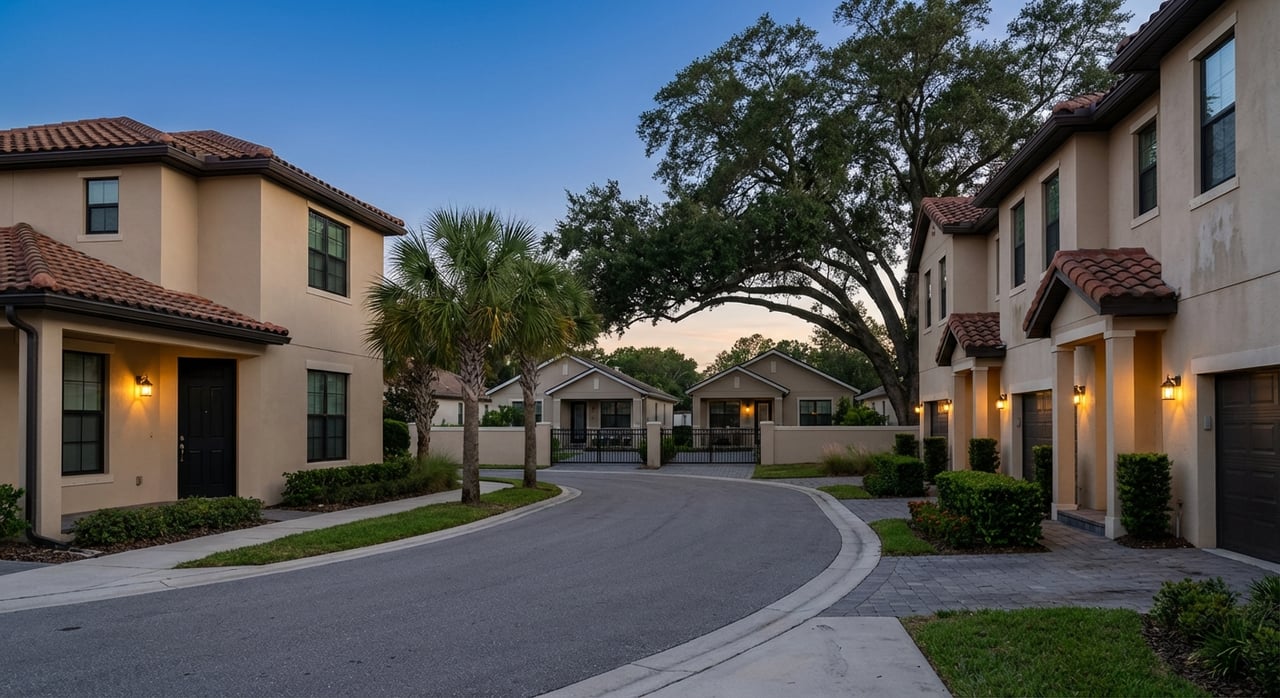
Thinking about a home in VillageWalk at Lake Nona and keep seeing “CDD” on listings? You are not alone. Understanding Community Development District fees helps you budget accurately and avoid surprises at closing. In this guide, you will learn what a CDD is, how fees work in VillageWalk, what they fund, and exact steps to verify the current amounts before you make an offer. Let’s dive in.
What a CDD is in Florida
A Community Development District, or CDD, is a special-purpose local government created under Chapter 190 of the Florida Statutes. Its role is to plan, finance, build, and maintain infrastructure and amenities that serve the community. To fund these projects, a CDD can issue bonds and then collect assessments from properties inside the district to repay the debt and cover ongoing operations.
A CDD is governed by a Board of Supervisors. Early on, the developer may appoint the board. As homes are occupied, residents elect the board. Districts hire a manager, attorney, and engineer, and they operate with public records and open meetings requirements, so budgets, audits, and minutes are available to the public.
What VillageWalk CDD fees cover
Most CDD assessments fall into two buckets:
- Debt service assessments. These repay bonds that financed the community’s initial infrastructure. The schedule often runs for many years and is typically a fixed annual amount per parcel based on the district’s assessment methodology.
- Operations and maintenance assessments. These fund the day-to-day costs to maintain district-owned assets. That can include landscaping of district areas, stormwater systems and ponds, street lighting, amenity center upkeep, utilities tied to district facilities, insurance, administration, engineering, and legal support.
From time to time, a district may adopt a special or capital assessment for new projects, major replacements, or shortfalls. Always ask whether any special assessment is active or planned.
How CDD assessments are billed
CDD assessments are usually collected one of two ways:
- On your county property tax bill as a non-ad valorem assessment. Many lenders escrow these amounts with your taxes and insurance.
- Direct billing by the district. If billed directly, confirm timing and whether your lender will allow escrow.
CDD assessments are mandatory for properties in the district. Unpaid assessments can become a lien and may lead to foreclosure, similar to unpaid property taxes.
CDD vs HOA at VillageWalk
A CDD is a local government entity focused on financing and maintaining public infrastructure and district-owned amenities. An HOA is a private association that enforces community covenants and may operate certain amenities or maintain areas not owned by the district. Many planned communities, including VillageWalk, have both. You will likely have HOA dues and CDD assessments, and they serve different purposes.
How CDD fees affect your monthly payment
When you evaluate a home, include the monthly equivalent of the CDD in your budget. A simple way to estimate:
- Monthly CDD impact = (Annual O&M assessment + Annual debt service assessment) / 12
- Total monthly fees = HOA monthly dues + Monthly CDD impact
Lenders often treat CDD assessments as part of your recurring housing expense. Ask your lender how they handle CDDs during preapproval and whether they will escrow the assessment.
New construction vs resale in VillageWalk
If you buy new construction, there may be a capital or special assessment tied to initial bond financing. Sometimes this is due at closing, sometimes the developer structures it to be paid over time. Confirm the exact amount and timing in your purchase contract and ask whether any portion can be prepaid.
For resale homes, you will carry the ongoing annual assessments. Check whether the seller is current. If there are unpaid assessments, your title company will usually require payoff at closing.
How to verify VillageWalk CDD amounts
Do not rely only on listing remarks for CDD details. Use these steps to confirm accurate numbers for a specific property in VillageWalk at Lake Nona:
- Start with local records and the district office
- Look up the parcel with the Orange County Property Appraiser to confirm district status and parcel details.
- Check the Orange County Tax Collector for the most recent property tax bill to see if the CDD appears as a non-ad valorem line item.
- Find the VillageWalk CDD website or the district management company to access budgets, agendas, and contact information.
- Request official documents from the district manager
- Adopted assessment roll showing both O&M and debt service for your parcel type.
- Current year budget for operations and maintenance.
- Debt service schedule, Engineer’s Report, and Master Assessment Methodology to understand how assessments are allocated.
- If you are considering payoff, request an official assessment payoff letter with instructions and any prepayment terms.
- Confirm with your deal team
- Ask the seller or listing agent for a copy of the latest tax bill that shows the CDD lines.
- Have your lender confirm whether they will escrow the assessment and how it affects qualifying ratios.
- Ask your title company to verify whether any unpaid assessments or liens must be satisfied at closing and to gather payoff demands.
- Review recent district activity
- Read district meeting minutes and budgets from the last 12 to 24 months to spot any planned increases, major projects, or special assessments under consideration.
Documents to request and review
- District Budget for the current fiscal year
- Adopted assessment roll and debt service schedule
- Engineer’s Report and Master Assessment Methodology
- Bond Official Statement and Trust Indenture for prepayment rules
- District meeting minutes and agendas for the last 12 to 24 months
- Seller’s closing disclosure and recent tax bill
- HOA governing documents and HOA budget
- Title company payoff confirmations
Questions to ask during showings
- Is this property in a CDD, and what is the current annual assessment split between O&M and debt service?
- Are assessments collected on the county tax bill or billed directly by the district?
- For new construction, is there a capital assessment due at closing, and can any portion be financed or prepaid?
- Can assessments be prepaid or assumed, and what is the payoff process?
- Do recent district minutes show upcoming projects or potential rate changes?
Red flags to watch
- A large one-time capital assessment due at closing that was not disclosed early
- Sharp year-over-year increases in O&M assessments or frequent special assessments
- Ongoing developer control of the CDD board with long-term obligations that could raise resident costs
- Recent or planned bond issuances or refinancings that may alter assessment levels
- Inconsistent disclosures between the seller, HOA materials, and county records
How to calculate your monthly impact
Use the seller’s tax bill and the district’s documents for actual figures. Then plug them into this simple approach:
- Add the annual O&M assessment to the annual debt service assessment.
- Divide by 12 to get the monthly CDD impact.
- Add your HOA monthly dues to get a fuller picture of your monthly fees.
If the district bills semiannually or directly, convert the total to a monthly average so you can compare communities on equal footing.
Practical tips for buyers
- Start verification early. Get the district documents during your initial property research so you understand the cost before you submit an offer.
- Loop in your lender. Different lenders treat CDD debt differently. Confirm whether they will escrow the assessment and how it factors into your debt-to-income ratio.
- Ask about prepayment. Some CDD debt can be prepaid under the bond documents. If you want to reduce your long-term carrying costs, request a payoff quote and timeline.
- Check recent minutes. Meeting minutes and budgets can reveal upcoming maintenance projects, amenity upgrades, or cost changes.
- Consult a tax professional. Tax treatment of assessments can vary. Some portions treated as property taxes may be deductible, while others may not.
Ready to compare specific homes in VillageWalk at Lake Nona with clarity on CDD and HOA costs? Get organized numbers, document checklists, and guidance on lender and title coordination by reaching out to Chris Neun. If you are selling in VillageWalk, you can also request a media-rich listing plan and get your free home valuation.
FAQs
What is a CDD at VillageWalk at Lake Nona?
- A CDD is a local government entity that finances and maintains community infrastructure and amenities, with costs repaid through mandatory assessments on properties in the district.
How are VillageWalk CDD fees billed to owners?
- Assessments are typically collected on the county property tax bill as non-ad valorem items, or they may be billed directly by the district depending on collection agreements.
What do VillageWalk CDD fees usually fund?
- They fund bond repayment for initial infrastructure plus annual operations like landscaping of district areas, stormwater systems, lighting, amenity upkeep, administration, insurance, and professional services.
How do CDD fees differ from HOA dues in VillageWalk?
- CDD assessments support government-level infrastructure and district assets, while HOA dues fund covenant enforcement and any HOA-managed amenities or services not handled by the district.
How can I verify current VillageWalk CDD amounts for a home?
- Review the district’s adopted assessment roll and budget, check the Orange County tax bill for the parcel, and confirm details with the district manager, your lender, and your title company.
Can I prepay or pay off the VillageWalk CDD debt portion?
- Some districts allow prepayment based on bond documents. Request a formal payoff letter from the district to confirm eligibility, amount, and instructions.
Will my lender escrow VillageWalk CDD assessments?
- Many lenders escrow assessments when they are on the tax bill, but policies vary. Ask during preapproval so your monthly payment estimate is accurate.